
The future is BRIGHT
Melbourne


Showing 1061 - 1080 of 1233 results

Pip is a passionate creative who is obsessed with applying design thinking to any and every project she can get her hands on, no matter the topic.

Bianca Shepherd is ANSTO’s Engineering Support Workshop Manager, confidently overseeing the manufacture and fabrication of equipment and specialised parts for critical Australian scientific and landmark infrastructure.

Sherry entered university, torn between the allure of science and the hands-on practicality of engineering. This lead her into the field of Material Science and Engineering.
Atomic mechanism produces colossal cooling effect in new class of materials .
Charcoal particles from recent bushfires in NSW were carried 50 kilometres by the wind, which has significance for fire history reconstruction.

Neutron Activation Analysis (NAA) is a highly sensitive method of quantitative elemental analysis. There is a wide range of potential applications for neutron irradiations.




Dr Safavi-Naeini is the Acting Leader of the Centre for Accelerator Science. She is a particle physicist and previously had a role as a research leader at the Human Health group.

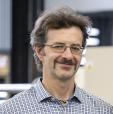
Role at ANSTO

The Australian Synchrotron is a source of powerful X-rays and infrared radiation that can be used for a wide range of scientific and technical purposes. Synchrotron X-rays are millions of times brighter than those produced by conventional X-ray machines in laboratories and hospitals.
ANSTO has supported a new study published in Quaternary Science Reviews that dates the dramatic collapse of one of the largest glaciers ever documented in the Himalayas. The findings overturn a long-held assumption about what sustains wet-climate glaciers.
