
Highlights - Energy Materials
Highlights of the Energy Materials Project.


Showing 81 - 100 of 243 results
Highlights of the Energy Materials Project.
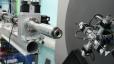
Sample environment types that are available on the Powder Diffraction beamline.

On the 10th of October 2025, the Minister for Industry, Science and Technology provided his Statement of Expectations to ANSTO.

ANSTO User Meeting 2021 - Speakers
ANSTO, the home of Australia’s nuclear science expertise and the Powerhouse Museum, home of Australia’s excellence and innovation in the applied arts and sciences will collaborate on research projects, establish an Indigenous Cultural Research Scholarship and combine efforts on STEM outreach activities.

You are invited to submit to the various awards from ANSTO and the User Meeting 2025 organising committee.

The Advanced Diffraction and Scattering beamlines (ADS-1 and ADS-2) are two independently operating, experimentally flexible beamlines that will use high-energy X-ray diffraction and imaging to characterise the structures of new materials and minerals.


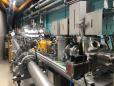
The Medium Energy- X-ray Absorption Spectroscopy beamlines will provide access to XANES and EXAFS data from a bending magnet source, optimised for cutting-edge applications in biological, agricultural and environmental science in an energy range that is not currently available at the Australia Synchrotron.


Koala is one of the leading small-molecule crystallography instruments in the world for determining the complex crystal structure of a wide range of chemicals and minerals.
Principal Technical Consultant Michael Druce shares some personal insights on the design and construction of ANSTO's nuclear medicine facility.

Australian Nuclear Science and Technology Organisation (ANSTO) is committed to protecting your personal information in accordance with the Privacy Act 1988 (Cth) (Privacy Act) and the Australian Privacy Principles.

Leena works on the development of new ligand systems for 68Ga and 177Lu.
The new Micro Computed Tomography (MCT) beamline is the first instrument to become operational as part of the $94 million Project BRIGHT program, which will see the completion of eight new beamlines at ANSTO’s Australian Synchrotron.
In Part 2 of our series exploring the world of nuclear science and technology at ANSTO, we share more detailed information about the nuclear scientist’s toolkit.