New approach to breast cancer detection using synchrotron radiation
Phase contrast tomography shows great promise in early stages of study and is expected to be tested on first patients by 2020.


Showing 621 - 640 of 1880 results
Phase contrast tomography shows great promise in early stages of study and is expected to be tested on first patients by 2020.
It's ANSTO's role to keep Australia across the very latest developments in nuclear science and technology from around the world. Part of this responsibility is keeping us abreast of the latest developments in nuclear power technologies.
Research will change understanding of Australian Aboriginal rock art found in rock shelters of the Kimberley and its relationship to a changing landscape
Four annual awards in neutron scattering were announced at Australian Neutron Beam Users Group (ANBUG) and AINSE Neutron Scattering Symposium (AANSS) to individuals with strong links to ANSTO

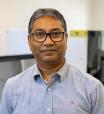

Krishant holds a PhD in Medicinal Chemistry, specialising in the design and development of novel platinum(IV)-based anticancer agents, where he has contributed to the development of a new class of compounds that is currently undergoing p
A lesson in Science and Sustainability.
ANSTO scientist, Dr Klaus Wilcken of the Centre for Accelerator Science, used cosmogenic nuclide dating to determine the ages of layered sand and gravel samples, in which seven footprints of the flightless bird, the moa, were found on the South Island in New Zealand in 2019.

On behalf of ANSTO thank you for your interest in our tours. We hope your visit to ANSTO will be both enjoyable and informative.
Blake Orr from ARPANSA review the Netflix series Radioactive Emergency.

Career Statement and Role at ANSTO
Scientists at ANSTO characterise structures with atomic detail using probes such as x-rays, electrons, neutrons and ions.

The Think Science! competition encourages students in Years 3-10 to learn science inquiry skills in a fun and accessible way! Entry is FREE and there are generous prizes for winning schools. Any topic can be chosen, and special materials are not required.
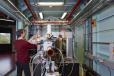
Beamtime Guide on the X-ray Fluorescence Microscopy beamline at the Australian Synchrotron.