What one moon flyby can and cannot do, and what comes next (Part 2)
Dr Mitra Safavi Naeini continues her commentary of the radiation studies being undertaken in the Artemis II mission.


Showing 221 - 240 of 434 results
Dr Mitra Safavi Naeini continues her commentary of the radiation studies being undertaken in the Artemis II mission.
Australia’s new Mo-99 manufacturing facility reaches practical completion
The Titan Krios cryo-electron microscope reveals the inner workings of life at the cellular level.

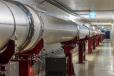
The Imaging and Medical beamline (IMBL) is a flagship beamline of the Australian Synchrotron built with considerable support from the NHMRC. It is one of only a few of its type, and delivers the world’s widest synchrotron x-ray ‘beam’.
In a new study published in Nature Communications, researchers from UNSW have demonstrated a more sustainable alternative: an electrochemical pathway that couples carbon dioxide and nitrogen-containing species to produce urea under mild conditions.
A research team from ETH Zurich developing and characterizing silicon carbide devices for power electronics, recently spent time at ANSTO’s Centre for Accelerator Science to use a specialised beamline in their investigations.
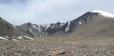
Research to assess the impact of recent landscape change by measuring fundamental geomorphic processes that are the result of long-term landscape evolution.
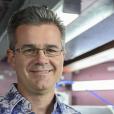
Dr Joseph Bevitt is a senior instrument scientist on the Dingo radiograph/tomography/imaging station, and scientific coordinator for the Australian Centre for Neutron Scattering.
Five exceptional female science communicators are part of a larger team who use skills in education and engagement to promote an interest in science amongst the public and students.

Career Statement and Role at ANSTO
$80.2 million in new funding to expand the research capabilities of the Australian Synchrotron.
On average, there is now 17 per cent less rainfall across Western Australia’s south-western region than was recorded prior to 1970. This rainfall reduction has economic, social and environmental implications for the region, in particular for the growing capital of Perth, as well as water-dependent industries in the state.
ANSTO physicist will gain further experience in particle therapy technologies.
NSTO’S major project to introduce eight new beamlines at the Australian Synchrotron has reached a milestone with the delivery of ‘first light’ to the new MEX-1 beamline.
The Waste Management Services group at ANSTO is now using a new automated storage and retrieval system (ASRS) that will enhance safety, access and efficiency.