Fine particle pollution peaks during bushfires
Recent catastrophic Australian bushfires produced extremely high levels of fine particle pollution.


Showing 141 - 160 of 250 results
Recent catastrophic Australian bushfires produced extremely high levels of fine particle pollution.
ANSTO is working with government partners to ensure that radioactivity in drinking water supplied to Aboriginal communities is at levels considered safe for consumption.
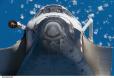
Materials researchers focus on development, performance and in-service degradation of nickel-based superalloys, reinforced carbon-Carbon (C/C) composites, and ultra-high temperature ceramics (UHTC).
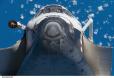
Material researchers at ANSTO use a range of in-house capabilities in the development, testing and characterisation of existing and emerging materials for extreme environments of the novel nuclear (fission/fusion) based energy-generation systems.

Padstow North and Caringbah North selected as winners of ANSTO's Top Coder competition.

CORIS360® GNI images gamma-ray and thermal neutron radiation sources, delivering an unprecedented ability to detect, localise, and identify nuclear materials.

Earlier this month, ANSTO welcomed a delegation of Elders from the Willandra Lakes Region World Heritage site to its Lucas Heights campus. The visit marked a significant collaboration between Traditional Custodians and scientists working to uncover the environmental history of Lake Mungo.
Powerful combination of deuteration and neutron scattering used to characterise structure of molecules on surface of nanoparticles.
A new radiocarbon dating facility opened at the University of New South Wales (UNSW) will complement the extensive radiocarbon facilities at ANSTO’s world-leading Centre for Accelerator Science

ANSTO researchers have taken up the challenge to develop a coating for the cladding used in nuclear reactors to prevent it from taking up hydrogen and releasing it if temperatures get too high and repair itself if damaged.

ANSTO has secured a $1.62 million Medical Research Future Fund (MRFF) grant under the Australian Brain Cancer Mission’s 2024 Brain Cancer Discovery and Translation program, administered by the Department of Health and Aged Care.
Role at ANSTO

You are invited to submit to the various awards from ANSTO, User Advisory Committee (UAC) and Australian Neutron Beam User Group (ANBUG).
Sharing ANSTO education expertise in nuclear with international secondary school teachers in IAEA training.