
Structural Modeller


Showing 1001 - 1020 of 1217 results
Modelling and experimentation - a powerful combination in probing mechanical properties of ion irradiated materials through nanoindentation.

Deuteration and nuclear techniques can contribute to the science of beauty.
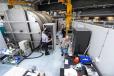
The Platypus instrument can be used to study all-manner of surface-science and interface problems, particularly related to magnetic recording materials and for polymer coatings, biosensors and artificial biological membranes.
The nature of Metal-Oxide-Semiconductor Field Effect Transistors (MOSFETs) present a fascinating paradox in space exploration. Their strength in radiation detection becomes their weakness in space operations, exposing an Achilles' heel for NASA. Yet, these same devices monitor radiation doses received by humans on earth and in space.

In Australia and the Southeast Asia basin, the ANSTO facility offers a wide range of unique nuclear-beam techniques for cultural heritage research.

An commercial technical consultant with ANSTO, based at the Clayton Campus, Dr Robert Acres collaborates with industry partners to improve products and processes within small to large enterprises and acro
Researchers have demonstrated a solar-driven approach to convert glycerol, a low-value by-product of biodiesel production, into hydrogen and higher-value chemicals

A team of scientists led by Monash University and the University of Melbourne in association with the Peter Doherty Institute for Infection and Immunity have made progress in clarifying the molecular interactions that underpin how our adaptive immune cells recognise SARS CoV-2, which causes COVID-19.

Two ANSTO physicist explain the three-body problem as featured in science fiction series of the same name



Applications are currently open for the 2024 Scholarship AINSE ANSTO French Embassies (SAAFE) Research Internship Program. The SAAFE Program supports early career researchers at PhD and Postdoctoral level to expand research and innovation activities within Human Health, the Environment and the Nuclear Fuel Cycle, to initiate sustainable research networks and linkages to support Australia, New Zealand and France research and innovation.
Radiocarbon dating of mud wasp nests was used as an indirect method of dating the Gwion Gwion style.