Accelerator Systems and Development expertise
ANSTO has in-house expertise in the operation and development of accelerator systems.


Showing 1061 - 1080 of 1507 results
ANSTO has in-house expertise in the operation and development of accelerator systems.

ANSTO has a full suite of mineralogical, chemical and hydrometallurgical facilities from laboratory through to pilot scale.

Radiation safety training courses delivered at ANSTO's Lucas Heights precinct offer access to on-site radiation facilities and our expert team also deliver bespoke courses around Australia.
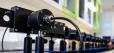
The Multi-wavelength absorption black carbon instrument MABI can determine the concentration and source of black carbon pollution.
Electron and X-ray diffraction techniques provide insights into material damage under stress-strain conditions.
Favourable conceptual design review may lead to expanded role for Australia on ITER diagnostics.
ANSTO launches new area of space research in collaboration with the National Centre for Space Studies and the National Institute of Health and Medical research in France.
First Asia Oceania Forum held at the Australian Synchrotron

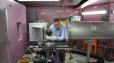
Neutron imaging or tomography creates a whole series of three-dimensional images of an object that can be reconstructed.
Australia is supporting a new regional initiative led by Fiji in partnership with the International Atomic Energy Agency (IAEA) under the Regional Cooperative Agreement for Research, Development and Training Related to Nuclear Science and Technology for Asia and the Pacific (RCA) to strengthen food security across Asia and the Pacific using nuclear science and technology.

The National Deuteration Facility offers the facilities and expertise to produce molecules where all or part of the molecular hydrogen is replaced with deuterium. This enables complex investigations of the relationship between the structure of molecules and their function using neutron scattering and other techniques.

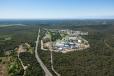
In January 2026, Mr Michael Quigley AM, ANSTO Board Chair, shared ANSTO's Statement of Intent with the Minister for Industry and Innovation, and Minister for Science.

ANSTO can analyse minute amounts of organic or inorganic matter embedded in a complex material
3D models of multilayered structures on engineering scale from nanoscale damage profiles.

Information has been provided to assist with the preparation of experiment proposals and beamtime.

The Think Science! event encourages students to engage with the Science Inquiry Skills process as outlined in the Australian National Curriculum.
The role of trace elements as palaeoclimate proxies has been explored in ANSTO-led collaborative environmental research.