Showing 721 - 740 of 994 results
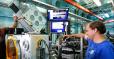
Trash to treasure with 3D printing breakthrough
New technology is being developed in Sydney to recycle used Personal Protective Equipment (PPE) and turn it into raw materials for 3D printing.
Surface coatings on Aboriginal rock art provide insights into climate environment
Radiocarbon measurements at ANSTO’s Centre for Accelerator Science have supported research published that provided insights into what the environment was like for the Aboriginal artists who created rock art over intervals spanning 43,000 years.
Water research
ANSTO undertakes research on Australia's water resources to inform more sustainable water management practices.
Public Interest Certificate (PIC) notification schedule
Under the Government Procurement (Judicial Review) Act 2019 (Cth) ANSTO will publish Public Interest Certificates (PICs) for the current financial year where appropriate.
Proposal round closed
Proposals to Australian Centre for Neutron Scattering and National Deuteration Facility closed
19th ACNS/NDF proposal round closed yesterday
Role at ANSTO
Dr Inna Karatchevtseva undertakes work at ANSTO in two main areas: defence industry research and fundamental materials research.
Food processing and development
Research can improve both food processing and food product development.
Book a school tour
Book a date with the Discovery Centre for your class.
Interactions of nanoplastics
Exploring the interaction of polystyrene nanoplastics and blood plasma proteins.
Another excellent year at the Bragg Institute
Dingo - Neutron Imaging
Neutron imaging or tomography creates a whole series of three-dimensional images of an object that can be reconstructed.
Work Health and Safety
ANSTO operates Work Health and Safety and Environmental Management Systems designed to ensure the safety of its employees, partners and members of the public to minimise the impact of our activities on the environment.
Decommissioning
Role at ANSTO
Two lectures from distinguished physicist
Dr Catalina Curceanu will explore exotic atoms and impossible phenomena in the universe.
Biodeuteration
Biodeuteration involves the growth of microorganisms in a heavy water (deuterium oxide) culture medium supplemented with either a deuterated or hydrogenated carbon substrate, depending on the level of deuteration required. The biomass is harvested and the deuterated molecule (e.g. protein) is purified and characterised.
Teacher Resources
Discover a plethora of Teacher Professional Development and Education Resources designed for both Australian and International teachers.
How climate change is erasing the world’s oldest rock art
Australasia is home to some of the oldest rock art motifs in the world. In tropical latitudes, due to climate change, the rock art deterioration is accelerating.