ANSTO recognises the contribution of staff for outstanding work, innovation, and excellence
ANSTO announces the recipients of the 2022 organisational awards


Showing 621 - 640 of 1507 results
ANSTO announces the recipients of the 2022 organisational awards

This 6-week program combines engaging hands-on activities with inquiry-based learning to inspire curiosity and help support the development of problem-solving in girls. Participants will have the opportunity to meet some of Australia’s leading female scientists and engineers!
Enthusiastically delivered by our qualified female educators, the program will provide a supportive environment to encourage girls to become confident and active learners.
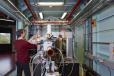
Beamtime Guide on the X-ray Fluorescence Microscopy beamline at the Australian Synchrotron.

Participate in live radiation demonstrations, cover syllabus content and visit ANSTO virtually during our online depth study classes for Year 11 Chemistry.
- Investigate properties of different radioisotopes and learn about their uses in medicine, industry and environmental research.
- Consider the scientific method and gather data during a live radiation experiment.
- See some of Australia's largest scientific infrastructure, including the OPAL multipurpose reactor.
Cost: $110 per class.
Dr Richard Garrett featured on an ABC National program that highlighted how far we are from a future with nuclear fusion energy. Image: Jamison Daniel, Oak Ridge Leadership Computing Facility
New infrared imaging technique reveals molecular orientation of proteins in silk fibres
Two ANSTO environmental scientists are part of a large team led by the Australian National University (ANU), who have received an Australian Research Council Discovery Project grant to investigate how environmental change and human activities since industrialisation have impacted the transport and deposition of toxic metals on the south coast of Australia, Tasmania, and remote Southern Ocean islands.
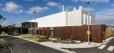
Frequently asked questions on the Mo-99 Manufacturing Facility and the ANSTO Nuclear Medicine project.
Supercomputing power helps unlock secrets in the ice.

The Biological Small Angle X-ray Scattering beamline will be optimised for measuring small angle scattering of surfactants, nanoparticles, polymers, lipids, proteins and other biological macromolecules in solution. BioSAXS combines combine a state-of-the-art high-flux small angle scattering beamline with specialised in-line protein purification and preparation techniques for high-throughput protein analysis.
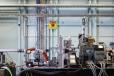
Samples on the X-ray fluorescence microscopy beamline at the Australian Synchrotron.
Nuclear safety expert discusses Fukushima
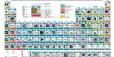
Designed to address the new 2026 NSW Science Stage 4 (Year 7-8) syllabus, this tour is a hands-on introduction to atomic structure, the properties and classification of some elements, and the structure of the periodic table.
All tours are available Monday to Friday for Years 7 to 12 classes. The cost per student is $12.50 and teachers are free.
Please print enough copies of the relevant workbook for your class before your visit to ANSTO.

Project members of Magnetism.

ANSTO provides secondary students with a range of learning resources for those interested in science or studying for exams. For teachers, ANSTO provides learning resources and professional development, as well as in-school-term science tours and videoconferences. Workbooks are provided as required learning material to accompany a school visit to ANSTO. They can also be used on their own as a classroom resource.
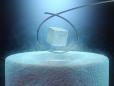
Applications, Recent results, Publications
ANSTO is a unique national science organisation that began operating under its predecessor The Australian Atomic Energy Commission (AAEC) 70 years ago.
X-ray crystallography at the Australian Synchrotron contributed to major research findings.