
Learn from Australia's nuclear experts
With over 70 years of nuclear expertise, ANSTO offers expert education and training programs


Showing 381 - 400 of 767 results
With over 70 years of nuclear expertise, ANSTO offers expert education and training programs

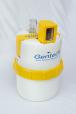
ANSTO’s nuclear medicine processing and distribution facility assembles, loads, tests and distributes a range of nuclear medicine products, including Mo-99. The Mo-99 is dispensed into an ANSTO radiopharmaceutical Gentech® Generator where it decays to Tc-99m.
Progress on tailorable nanoscale emulsion for a wide variety of applications including drug delivery

The Panel Pledge aims to increase the visibility and contribution of women and diverse leaders in public and professional forums.
New three year study with UNSW for Cotton Research Development Corporation.
Energy researchers from UNSW have reported progress using controlled architectural design and structural engineering as a method to fine-tune materials to have simultaneous high power and high energy density for the electrochemical storage in portable devices.
ANSTO has supported research led by a University of Sydney team who gained insights into how oil molecules retain their ‘liquid-like’ properties when they are chemically attached as an extremely thin layer to solid surfaces.

Discover the amazing world of nuclear science from your classroom. Join us for Meet an Expert, Nuclear Science Inquiry Skills, Junior Science, and Online Depth Study sessions for Chemistry, Physics and Investigating Science.

Developed by ANSTO’s predecessor the Australian Atomic Energy Commission (known as the AAEC) in the late 1960s, the Technetium-99m Generator revolutionised nuclear medicine imaging in Australia by enabling imaging procedures to be performed not only in major capital cities but throughout regional and rural Australia.

ANSTO plays a leading role in measuring and characterising fine particles from a range of locations around Australia and internationally.
Monash University, University of Queensland and Australian National University researchers have used ANSTO’s Australian Synchrotron in their study of meteorites found on Earth that could be used in future to find evidence of life on the planet Mars.
ANSTO will participate in a New Zealand Marsden project which will search for chemical clues linked to the origins of life on Titan, Saturn’s largest moon.
ANSTO recognises the traditional indigenous owners of the land at all its sites and works to contribute to the recognition of the indigenous cultural heritage of Australia.
ANSTO researchers have taken up the challenge to develop a coating for the cladding used in nuclear reactors to prevent it from taking up hydrogen and releasing it if temperatures get too high and repair itself if damaged.
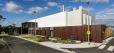
ANSTO's Mo-99 manufacturing facility secures Australia’s ability to produce Mo-99 to meet current and future domestic demand and provide a significant proportion to support global demand.