IAEA appointment
ANSTO Head of Research Dr Suzanne Hollins has been appointed to chair IAEA group on nuclear applications.


Showing 21 - 40 of 250 results
ANSTO Head of Research Dr Suzanne Hollins has been appointed to chair IAEA group on nuclear applications.
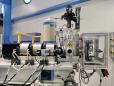
The high-energy heavy-ion microprobe is used for the characterisation or modification of material properties at depths from approximately 1 micrometre to maximum depths of up to 500 micrometres from the material surface.
Discussions were held on possible areas on cooperation including research reactor operation and utilisation, environmental monitoring of mining tails, and food provenance.
ANSTO has made two public submissions to parliamentary inquiries with another to be submitted in February 2020 on matters relating to nuclear technologies, their peaceful applications, and the nuclear fuel cycle.
Researchers from Murdoch University and associated collaborators are using ANSTO’s unique nuclear capabilities to gain detailed information about how wheat crops take in administered micronutrients to maximise their efficient use.
Four successful applicants announced for the 2018 AINSE-ANSTO-French Embassy Research Internship Program.

Radioisotopes are widely used in medicine, industry, and scientific research. New applications for radioisotopes are constantly being developed.

The User Advisory Committee (UAC) are pleased to present this year's invited speakers.

A new imaging technology developed at ANSTO makes it possible to image, identify and locate gamma-ray radiation in a safe and timely manner.
Today Dr Jenine McCutcheon from the University of Queensland’s School of Earth and Environmental Sciences has been recognised for her outstanding research with the Australian Synchrotron's Stephen Wilkins Medal.

Read about an ANSTO scientist and their work to prepare for a school project or interview.

The Biological Small Angle X-ray Scattering beamline will be optimised for measuring small angle scattering of surfactants, nanoparticles, polymers, lipids, proteins and other biological macromolecules in solution. BioSAXS combines combine a state-of-the-art high-flux small angle scattering beamline with specialised in-line protein purification and preparation techniques for high-throughput protein analysis.

ANSTO operates a range of cobalt-60 gamma irradiators, providing the Australian community with a range of irradiation services for medical, health, industry, agriculture and research purposes.

With enhanced submicron spatial resolution, speed and contrast, the Micro-Computed Tomography beamline opens a window on the micron-scale 3D structure of a wide range of samples relevant to many areas of science including life sciences, materials engineering, anthropology, palaeontology and geology. MCT will be able to undertake high-speed and high-throughput studies, as well as provide a range of phase-contrast imaging modalities.