Scientific ingenuity at work
Contributing to research that strengthens the defence of Australia


Showing 121 - 140 of 252 results
Contributing to research that strengthens the defence of Australia
ANSTO environmental scientists contribute to investigation of carbon capture in wetlands.
ANSTO researchers investigate the behavior of materials in extreme environments, to analyse and predict how they will behave under adverse conditions.
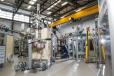
When an energetic ion beam hits a sample it will interact with the atoms through a number of very complex interactions. By detecting and measuring the reaction products resulting from the various interactions and their intensities, you can obtain quantitative data on the sample's constituent elements and their spatial distribution.
Australia is leading an agriculture project in the Asia and Pacific region, in partnership with the International Atomic Energy Agency (IAEA) and the Regional Cooperative Agreement for Research, Development and Training Related to Nuclear Science and Technology for Asia and the Pacific (RCA) to progress Atoms4Food.
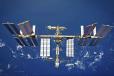
In space, without the protection of the magnetosphere, the type and dose of radiation is considerably different to what is naturally experienced on earth. However, it is the secondary particles of lower energies created when galactic and cosmic radiation interacts with shielding that is of concern for astronauts.
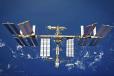
In collaboration with the French National Institute of Health and Medical Research (INSERM) and the French International Space Agency (CNES), ANSTO scientists are undertaking research on the radiobiological effects of secondary particles that are created when radiation interacts with the shielding on the International Space Station.
ANSTO is a partner on the National Space Qualification Network (NSQN) led by the Australian National University (ANU) that will transform Australia into a world-leading space centre by enhancing facilities to test payloads, components, and hardware prior to their use in harsh environments of space.

ANSTO works in partnerships and collaborative ventures with national and international organisations. Partner with ANSTO.
A pioneering study led by Professor Junpei Yamanaka of Nagoya City University and an international team that included ANSTO has delivered transformative insights into the behaviour of colloidal particles under microgravity.
Research will change understanding of Australian Aboriginal rock art found in rock shelters of the Kimberley and its relationship to a changing landscape


Your students can analyse real research data from ANSTO scientists.

At ACNS we currently have 13 instruments in our user program, which use a variety of scattering techniques to probe materials over a range of length scales.

Guide to successful proposals and experiments at the Powder Diffraction beamline.