Dating Aboriginal rock art using mud wasp nests
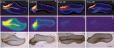
Radiocarbon dating of mud wasp nests was used as an indirect method of dating the Gwion Gwion style.
Showing 841 - 860 of 1024 results
Radiocarbon dating of mud wasp nests was used as an indirect method of dating the Gwion Gwion style.
On this page you will find useful information about applying for a position at ANSTO and some tips on how you can prepare for an interview.
ANSTO and the University of Wollongong are jointly operating a unique laboratory able to extract carbon-14 (radiocarbon) atoms out of a rock that is attracting global interest as a new tool to better understand recent changes in Earth’s climate system and rates of landscape change over the past 20, 000 years.
Australian Centre for Neutron Scattering succcess at 2017 awards
The complex engineering of scientific instruments is explored in this 'behind the scenes' look at the installation of frontends for two new beamlines at the Australian Synchrotron.
Join us for this online webinar to explore and discuss the huge opportunities in growing a dynamic and impactful future nuclear workforce.
A large team of international researchers have used synchrotron techniques to understand how key proteins contribute to the virulence of the rabies virus, sometimes called the “zombie virus.”

Award recipients Dr Richard Garrett and Dr Nigel Lengkeek with Dr Tien Pham will deliver a Distinguished Lecture on 15 November at ANSTO.
Research has demonstrated that internally generated neutrons could be used to effectively target micro-infiltrates and cancer cells outside of the defined treatment regions.
This program explores the mechanism and outcome of the interaction of radiation on biological systems in order to improve our understanding of the impact of radiation on the brain, optimise radiotherapy and develop mitigation strategies for space travellers.
Shorebirds Competition 2022 results.
Part of the Large Hardon Collider
Research and development activity explores new, boutique radioisotopes, including positron, gamma and beta/gamma emitter. The aim is to provide material for the next generation of diagnostic and therapeutic radiopharmaceuticals
Dr Storr has worked for over 40 years in nuclear science and technology in a range of positions spanning operations, research and executive management.
Role at ANSTO
Dr Richard Mole is an instrument scientist co-responsible for the cold-neutron time-of-flight spectrometer PELICAN.
ANSTO is one of the world's leading providers of irradiation services for silicon ingots, which are used by the multimillion dollar electronics industry across Europe and Asia. Each year, ANSTO irradiates more than 50 tonnes of silicon.