
Showing 701 - 720 of 986 results
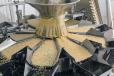
Nuclear techniques bring new insights into food
Research explores how structure contributes to function in food
Soft x-ray spectroscopy
Soft x-rays are generally understood to be x-rays in the energy range 100-3,000 eV. They have insufficient energy to penetrate the beryllium window of a hard x-ray beamline but have energies higher than that of extreme ultraviolet light.
STEAM Club for Girls
Offered to girls in Years 5, 6 and 7, the STEAM Club encourages creative exploration of Science, Technology, Engineering and Mathematics through the Arts (the A in STEAM).
The women of nuclear stewardship science are experts in the safe use of radioactivity
Work from OPAL and NDF featured in Chemical Science
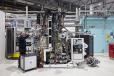
Small angle X-ray scattering (SAXS )/ Wide angle X-ray scattering (WAXS)
The SAXS / WAXS beamline at the Australian Synchrotron is a highly flexible x-ray scattering facility with purpose-built optics and a very flexible endstation and SAXS camera enable multiple types of experiments.
Role at ANSTO
Dr Inna Karatchevtseva undertakes work at ANSTO in two main areas: defence industry research and fundamental materials research.
Exceptional group of women at the forefront of science outreach at ANSTO
Five exceptional female science communicators are part of a larger team who use skills in education and engagement to promote an interest in science amongst the public and students.
First Magnetism Paper from PELICAN
User Meeting 2025 - Abstract Requirements & Themes
Water research
ANSTO undertakes research on Australia's water resources to inform more sustainable water management practices.
Public Interest Certificate (PIC) notification schedule
Under the Government Procurement (Judicial Review) Act 2019 (Cth) ANSTO will publish Public Interest Certificates (PICs) for the current financial year where appropriate.
Proposal round closed
Proposals to Australian Centre for Neutron Scattering and National Deuteration Facility closed
19th ACNS/NDF proposal round closed yesterday
Trash to treasure with 3D printing breakthrough
New technology is being developed in Sydney to recycle used Personal Protective Equipment (PPE) and turn it into raw materials for 3D printing.
Surface coatings on Aboriginal rock art provide insights into climate environment
Radiocarbon measurements at ANSTO’s Centre for Accelerator Science have supported research published that provided insights into what the environment was like for the Aboriginal artists who created rock art over intervals spanning 43,000 years.