Australian led cancer project making an impact at its first regional training course in Malaysia
The Australian led regional cancer care project in medical physics held its first regional training course in Malaysia to progress Rays of Hope.


Showing 341 - 360 of 677 results
The Australian led regional cancer care project in medical physics held its first regional training course in Malaysia to progress Rays of Hope.
Griffith University researchers are conducting an experiment at ANSTO that will test a revolutionary physics theory that time reversal symmetry-breaking by neutrinos might cause a time dilation at the quantum scale.
Earlier this month, ANSTO welcomed a delegation of Elders from the Willandra Lakes Region World Heritage site to its Lucas Heights campus. The visit marked a significant collaboration between Traditional Custodians and scientists working to uncover the environmental history of Lake Mungo.

ANSTO is Australia’s nuclear centre of excellence. It has a mandated role to advise the Australian Government on all nuclear and science technology matters.

This statement outlines the ways in which the events organised and run by ANSTO meet the goals outlined in the ANSTO Environmental Sustainability Strategy in the aim to reduce ANSTO’s environmental footprint.
ANSTO to receive a new grant to continue to fight chronic kidney disease killer in Sri Lanka.
The nature of Metal-Oxide-Semiconductor Field Effect Transistors (MOSFETs) present a fascinating paradox in space exploration. Their strength in radiation detection becomes their weakness in space operations, exposing an Achilles' heel for NASA. Yet, these same devices monitor radiation doses received by humans on earth and in space.
Investigators have verified and quantified the relationship between the Earth’s land biosphere and changes in temperature and provided evidence that temperature impacts the cycling of carbon between land, ocean and the atmosphere.
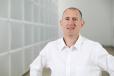
Andrew Peele was appointed Group Executive for ANSTO Nuclear Science and Technology in July 2021 and was Director of the Australian Synchrotron from 2013 -2021. He is an adjunct Professor of Physics at La Trobe University.
Nuclear techniques used in investigation of a new class of micro and nanoscale zinc fertilisers.
Highlighting the contribution of four inspirational ANSTO leaders on International Women's Day.

The measurement and manipulation of radiation and radioactive materials within biological systems. Capabilities include access to a range of radioisotopes, gamma/X-ray sources and a selection of X-ray beams, ion beams and neutron beams for irradiation.
Researchers developing new materials and devices that can withstand the harsh radiation environment in space are using the unique ANSTO’s capability to simulate the effects of high-energy ion irradiation on the properties and performance of these materials and devices.

The Detection & Imaging group builds on ANSTO’s 70-year history of scientific achievements and contributions in meeting the nuclear needs of industry, globally.
