ANSTO contributes to funded ARC Discovery and Linkage projects
Enhancing safety of trailer trucks among research projects
Showing 241 - 260 of 1690 results
Enhancing safety of trailer trucks among research projects
A large group of ANSTO environmental scientists and collaborators have produced the first groundwater stable isotopes, ‘isoscapes’, intuitive maps with grid data, across NSW combining new and pre-existing isotope measurements.
The Australian Nuclear Science and Technology Organisation (ANSTO), will launch its new radiation detection technology, the CORIS360 Gamma Neutron Imager (CORIS360 GNI), at the 2026 Waste Management Symposia in Phoenix, Arizona, USA, this March.
Students investigate the production of nuclear medicines in the OPAL multipurpose reactor, the use of nuclear medicines to diagnose and treat disease, and the science behind working safely with radiation.
This program is designed to address content and skill outcomes in the Year 9 and Year 10 Science Australian Curriculum and NSW syllabuses.
Cost: $90 per class.
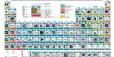
Designed to address the new 2026 NSW Science Stage 4 (Year 7-8) syllabus, this tour is a hands-on introduction to atomic structure, the properties and classification of some elements, and the structure of the periodic table.
All tours are available Monday to Friday for Years 7 to 12 classes. The cost per student is $12.50 and teachers are free.
Please print enough copies of the relevant workbook for your class before your visit to ANSTO.
ANSTO scientists were members of an inter-disciplinary team led by the University of Sydney, who examined six 19th century West African swords, using a non-invasive multi-methodological approach to reveal the composition and manufacturing history of the iron implements.
ANSTO’s Centre for Accelerator Science measures extra-terrestrial plutonium in a study to clarify the origin of the heavier elements
We are using nuclear and other methods to improve the traceability of food to ensure safety and security for consumers and industry, optimise the various functions of food and its production and understand the fundamental mechanisms that link some food to an immune response
Study shows for the first time that vegetation in the Windmill Islands, East Antarctica is changing rapidly in response to a drying climate.
Singapore researchers publish findings of link between proteins of archaea and eukaryotes despite being separated by more than 2 billion years of evolution.
ANSTO has put together a robust multidisciplinary approach to understanding the impacts of nanomaterials, investigating a common food additive, E171 titanium dioxide, used primarily as a colouring agent in everyday foods.
Scientists from Monash, ANSTo and China have developed an ultra-thin membrane that could separate harmful ions from water or capture gases.
ANSTO is coordinating and facilitating the calling of pre-concept papers for the next cycle of technical cooperative project proposals under the Regional Cooperative Agreement for Research, Development and Training Related to Nuclear Science and Technology for Asia and the Pacific (RCA) | IAEA