Award recipients to present Distinguished Lectures
Award recipients Dr Richard Garrett and Dr Nigel Lengkeek with Dr Tien Pham will deliver a Distinguished Lecture on 15 November at ANSTO.


Showing 521 - 540 of 680 results
Award recipients Dr Richard Garrett and Dr Nigel Lengkeek with Dr Tien Pham will deliver a Distinguished Lecture on 15 November at ANSTO.
Using neutron imaging techniques at ANSTO, researchers from Macquarie University have gained a better understanding of how corrosion forms and spreads through concrete that is commonly used in sewer pipes.
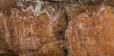
Research to identify past human interactions with the environment and clarify information which may result from human impact or responses to changing environments.


Micro-Particle Induced X-ray Emission (µPIXE) is used to construct elemental maps that show variations of an element's concentration across the sample surface.
Given the importance of water in Australia, surprisingly, there is relatively little information about the past variability of rainfall on this continent. Although there is a good annual record of the past 100 years in Australia, there is nothing much before that period and no known cave deposit records exist for New South Wales.
Moving earth in the search for dark matter: laboratory construction underway at mine site.
Nuclear security experts and officials from Australia’s nuclear agencies have convened at the International Atomic Energy Agency’s (IAEA) headquarters in Vienna, Austria last week for the International Conference on Nuclear Security (ICONS).
ANSTO scientist Dr Paul Callaghan helped develop new OECD guidance for studying how nanoparticles are absorbed, distributed and cleared by the body.
Australian clean energy technology company, entX Limited is taking advantage of ANSTO’s unique capacity to generate tailored radioisotope products in the OPAL multi-purpose nuclear reactor to advance a series of innovative projects.

Collaborators on the Magnetism project.

Particle induced X-ray emission can be used for quantitative analysis in archaeology, geology, biology, materials science and environmental pollution.
CEO Shaun Jenkinson, Group Executive for Nuclear Science and Technology Andrew Peele and ANSTO NCRIS Facility Directors, Jamie Schulz, Tamim Darwish, Ceri Brenner and Mitra Safavi-Naeini, attended the Parliamentary Reception to celebrate the 20th Anniversary of the Australian Government’s National Collaborative Research Infrastructure Strategy (NCRIS) in June.
The Australian Government’s nuclear agency, ANSTO, together with NSW Police and multiple state and federal authorities, has completed an operation to repatriate radioactive waste from the UK.

Elizabeth joined ANSTO at the beginning of 2024 and works as a Research Support Officer for Environment where she is involved in diverse research including ground water sampling and coral provenance.