nandin unlocks 400 years of business expertise
New mentor program offers deep brains trust to support the development of southern Sydney startups


Showing 481 - 500 of 1873 results
New mentor program offers deep brains trust to support the development of southern Sydney startups
Imperial College London researchers tapped into ancient geological data locked within precariously balanced rocks using a new technique to boost the precision of hazard estimates for large earthquakes.

An accomplished international photographer has capture dazzling new images of one component of the main ring at our Australian Synchrotron and provided an inside view of the electron’s path when it is used.

Read about an ANSTO scientist and their work to prepare for a school project or interview.

Dr Naveen Vankadari is a Beamline Scientist (Industry Specialist) across the structural biology beamlines at the Australian Synchrotron (ANSTO).
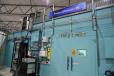
Publications and resources from the Powder Diffraction beamline.
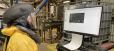
ANSTO has a full suite of mineralogical, chemical and hydrometallurgical facilities from laboratory through to pilot scale.
The NSW Government will invest $12.5 million to support the expansion of the Innovation Precinct at the Lucas Heights campus of the Australian Nuclear Science and Technology Organisation (ANSTO).
Recently, a small delegation, including Yandruwandha Yawarrawarrka representatives from the remote outback settlement of Innamincka SA, travelled to ANSTO to deliver rare wooden Aboriginal archaeological artefacts for measurements to determine their age and origin.
In a world-first study, Australian environmental scientists have used cave stalagmites as a record of groundwater replenishment over time, that showed the current level of rainfall recharging groundwater in southwest WA is at its lowest for at least the last 800 years.
ANSTO recognises local Indigenous heritage in new mural