

Showing 41 - 60 of 675 results

Local Environmental Monitoring
ANSTO is committed to monitoring its environmental performance and providing the community with accurate information about it. We also publish live meteorological data from our 49m Lucas Heights weather tower every 15 minutes.
Imaging technology has the ability to capture and display gamma radiation
A new imaging technology developed at ANSTO makes it possible to image, identify and locate gamma-ray radiation in a safe and timely manner.
The women of nuclear stewardship science are experts in the safe use of radioactivity
Nuclear research techniques are an important tool for environmental scientists to understand past climates and anticipate the future
ANSTO has played a formative role and continues to make important contributions using nuclear and isotopic techniques to understand past climates and patterns of change, maintain water resource sustainability and provide insights into the impact of contaminate in the environment.
Research brings a better understanding of the stability of very old groundwater
Groundwater experts from ANSTO and UNSW have led a collaboration of Australian and American researchers to analyse the composition of deep, very old groundwater and develop a new conceptual framework that describes the degradation of carbon over time in the subsurface.
It's all about the interface with multi-use polymer brushes
The University of Newcastle and UNSW [GW1] are using advanced neutron scattering techniques at ANSTO to carry out research on the structure of polymers in complex salt environments that will ultimately provide a way to predict their behaviour for real-world applications.
COVID-19 proof, healthy workstation wins ACS COVID-19 Online Hackathon
Nuclear facilities and expertise support a study of legacy nuclear weapons site off Western Australia
Repatriation of Australian waste from France
ANSTO's 'Sharpening the Focus' Summit Series Kicks Off with a Resounding Success
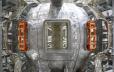
ITER
ANSTO signed a cooperation agreement with ITER to enable Australia to engage with and benefit from participation in the world’s largest engineering project to create fusion energy.

What are radioisotopes?
Radioisotopes are widely used in medicine, industry, and scientific research. New applications for radioisotopes are constantly being developed.

Oil and Gas Decommissioning
With more than 50 years of experience in monitoring natural and anthropogenic radionuclides in the environment, ANSTO can provide the crucial data and insights you need to assist with the planning and risk management associated with oil and gas decommissioning.
Blue Carbon Horizons Team wins Eureka Prize for Environmental Research
Blue Carbon Horizons Team showed coastal wetlands capture more carbon as sea levels rise
Queensland reef scientist wins new award for erosion research
Today Dr Jenine McCutcheon from the University of Queensland’s School of Earth and Environmental Sciences has been recognised for her outstanding research with the Australian Synchrotron's Stephen Wilkins Medal.
Using the power of computing to analyse the structure of materials in extreme environments
MOU formalises cooperation with Vietnamese nuclear agencies
Discussions were held on possible areas on cooperation including research reactor operation and utilisation, environmental monitoring of mining tails, and food provenance.
ANSTO Hosted IAEA Pacific Islands Workshop in February 2024
In early February, ANSTO was honoured to host the International Atomic Energy Agency (IAEA) National Liaison Officers Meeting and Sub Regional Approach to the Pacific Islands (SAPI) Programme, which focused on the development and delivery of the IAEA Technical Cooperation Programme in the Pacific.
Jarosite on Earth and Mars
Useful in some mineral processes but a major problem in others, jarosite may be the key to unlocking the geological history and environmental context of water on Mars.