Creative Kids Voucher can be used for school holiday workshops
Parents can use their NSW Government Creative Kids Voucher to pay for ANSTO's School Holiday workshops.


Showing 1 - 20 of 21 results
Parents can use their NSW Government Creative Kids Voucher to pay for ANSTO's School Holiday workshops.
ANSTO hosted an international training workshop on Pacific isotope hydrology at its Lucas Heights facility in Sydney from 16 - 20 March 2026, bringing together experts and water resource practitioners from across the Pacific and partner organisations.

ANSTO's Sydney locations are home to the Open Pool Australian Light-water (OPAL) multi-purpose reactor, the Centre for Accelerator Science (CAS), the Australian Centre for Neutron Scattering, the National Research Cyclotron and the National Deuteration Facility.
COVID-19 can’t stop kids with a passion for science and technology, with ANSTO launching our new online STEAM Club just in time for the school holidays.

ANSTO's Melbourne location is home to the ANSTO-owned and operated Australian Synchrotron. The Synchrotron is one of the Australia's most significant pieces of scientific infrastructure.
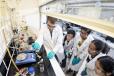
ANSTO Big Ideas encourages students to creatively communicate the work of an Australian scientist, and explain how their work has inspired them to come up with a Big Idea to make our world a better place. This competition is intended to engage and support Australian students in years 7-10 in Science and encourage them to pursue studies and careers in STEM.

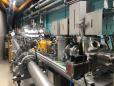
The Medium Energy- X-ray Absorption Spectroscopy beamlines provides access to XANES and EXAFS data from a bending magnet source, optimised for cutting-edge applications in biological, agricultural and environmental science in an energy range that is not currently available at the Australia Synchrotron.


Science and medical experts meet in Adelaide to discuss great potential of particle therapy in Australia

Read about an ANSTO scientist and their work to prepare for a school project or interview.
ANSTO’s OPAL multi-purpose research reactor at Lucas Heights has officially returned to power and recommenced operations, following a months-long planned shutdown to carry out essential maintenance and upgrades.


You are invited to submit to the various awards from ANSTO, User Advisory Committee (UAC) and Australian Neutron Beam User Group (ANBUG).